Que cherche-tu?
bannière de page intérieure
Blog
  • How to Choose the Best Double Wall Paper Cups for Your Coffee Shop Aug 06, 2026
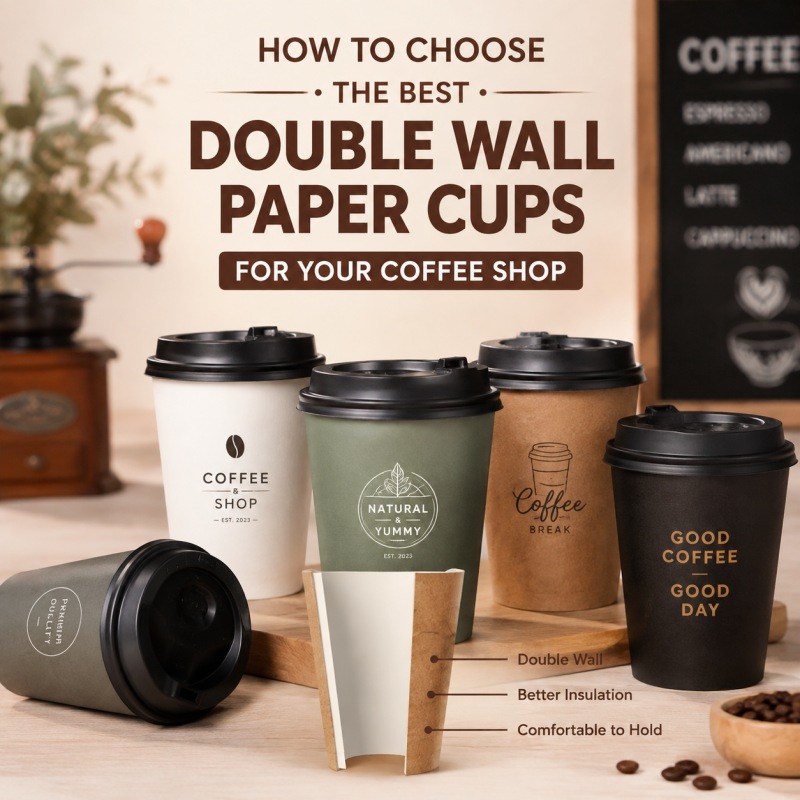
    As a coffee shop owner, your drinkware directly shapes customer satisfaction, brand perception, and daily operational safety. Hot coffee demands containers that protect hands while keeping beverages warm. Choosing high-quality double wall paper cups requires careful evaluation of five essential factors: heat insulation performance, structural durability, lid fitment, custom branding capability, and unit cost. Evaluating physical cup construction prevents costly cafe accidents. Weak sidewalls collapse easily under pressure, and ill-fitting lids cause messy spills. Furthermore, poor insulation forces customers to use extra sleeves, driving up expenses. Inspecting paper firmness, seam tightness, and rim consistency ensures your takeaway cups deliver a safe, premium experience.   Key Takeaways Double wall paper cups keep drinks hot longer and protect customer hands without extra sleeves. High-density paperboard and tight rims prevent messy leaks, cup collapses, and burn accidents. Standardized top rim sizes save valuable storage space and speed up busy coffee service. Custom printed eco-friendly cups improve your brand image and protect the environment.   Evaluate Insulation and Material Quality Advantages of Double Wall Paper Cups You improve daily cafe operations when you select double wall paper cups for your hot beverage menu. The outer paper layer creates an insulating air gap that slows heat loss. This clever physical structure protects your customers' hands from high beverage temperatures. You eliminate the need for separate cardboard sleeves entirely. Removing extra sleeves saves valuable back-of-house storage space. Eliminating sleeves also cuts down drink preparation time during morning rush hours. Proper heat insulation ensures a premium drinking experience for every customer. Superior heat retention maintains your specialty coffee at optimal serving temperatures longer. Extended Thermal Duration: Double-wall paper cups maintain drink temperatures effectively for 20 to over 30 minutes, whereas single-wall alternatives lose heat much faster, lasting only about 10 to 15 minutes. Insulation Mechanism: The structural design incorporates an intentional air gap between two layers of paper, which functions as an insulating barrier that minimizes heat conduction. Metric / Thermal Property Performance Gain of Double-Wall vs. Single-Wall Key Observation / Test Detail Overall Insulation Improvement ~60% better Measured when filled with 95°C hot water Outer Wall Surface Temperature 33%–40% reduction (24°C–27°C lower) Maintains surface near 50°C instead of >80°C Effective Thermal Conductivity 44% lower Trapped 3–5mm air layer approaches air's thermal conductivity Heat Transfer / Temp Rise Rate Reduced to 41.7% of single-wall rate Significantly slows down heat loss over time Using double wall paper cups protects customer comfort while maintaining beverage taste over time. Your customers enjoy hot drinks safely without burning their fingers.   Paper Density and Wall Structure Paperboard density directly dictates physical cup strength and thermal retention. Packaging manufacturers measure paper weight in grams per square meter (GSM). High paperboard GSM prevents sidewall softening when hot liquid fills the container. Choosing a robust disposable double-walled coffee cup keeps structural integrity intact throughout long customer commutes. You must select appropriate thickness ranges for both interior and exterior walls to guarantee maximum product durability in daily cafe operations. High density paperboard provides rigid wall support during daily customer handling. Layer Recommended GSM Range Inner Wall 180 – 250 GSM Outer Wall 200 – 300 GSM Combining these heavy paperboard layers creates a sturdy rigid frame. Higher density paperboard effectively resists internal moisture absorption over time. Proper thickness keeps cup sidewalls firm during firm squeezing. Firm sidewalls protect your customers from accidental cup collapsing or liquid spills. You maintain consistent drink presentation across every service shift by ordering correct material densities. Durable cup walls prevent hot liquids from leaking through weakened paper seams.   Rim Rigidity and Leak Prevention A tightly rolled rim provides essential structural support to the upper cup edge. Firm rim rigidity prevents cup collapsing when customers apply downward pressure to attach drink lids. You safeguard your business against messy spill accidents by verifying rim tightness during sample evaluations. Precise rim circularity ensures an airtight lid seal for busy on-the-go patrons. Uniform rim dimensions stop liquid seepage along side seams during transport. Premium double wall paper cups maintain shape under heavy use, ensuring safe transport for every hot beverage you serve. Strong rims retain structural integrity under continuous handling. You build customer trust when your drink packaging prevents accidental burn injuries and clothing stains. Quality testing guarantees reliable lid fitment across high-volume daily beverage sales.   Select Sizes and Compatible Lids Matching Capacities to Menu Items Selecting correct cup capacities protects original beverage flavor profiles and increases overall customer satisfaction. In North America, offering 4 oz, 8 oz, 12 oz, and 16 oz options covers about 95% of typical menu orders. Core drivers like 12 oz and 16 oz sizes represent 65%–75% of total daily cup volume. Continental European specialty menus rely on a standard 200–300 ml range for takeaway orders, with ~400 ml acting as maximum menu capacity. Matching physical cup volumes preserves intended coffee recipes. An 8oz double wall paper cups design holds cappuccinos within 150–200ml total volume, maintaining rich espresso taste without milk dilution. A 12oz cup holds double espresso shots alongside 250–270ml of steamed milk with proper headroom. Furthermore, a 16oz size accommodates large lattes and cold ice displacement effortlessly.   Securing Leak-Proof Lid Fits Precise lid fitment prevents hazardous drink spills and protects customer safety during busy morning commutes. You must evaluate physical snap-fit lid security against the top rolled rim profile of your chosen double wall paper cups. Strong rim engagement keeps lids anchored tightly when customers apply firm handling pressure. Proper lid closure maintains internal beverage temperature effectively and stops liquid seepage along side paper seams. Weak lid fitment causes dangerous liquid drips during active customer movement. Verifying tight lid seals across daily sample batches protects customer clothing and maintains high service standards.   Standardizing Rim Diameters Standardizing top rim diameters improves daily operational efficiency across your entire beverage menu. Utilizing standardized rim sizes reduces your required cup storage footprint by an estimated 15–20%. Baristas grab universal lid designs quickly during rush periods without searching through matching size variants. Eliminating redundant lid SKUs lowers overall working capital tied up in unused storage inventory. Streamlining rim profiles minimizes drink preparation mistakes during peak operational sales shifts. Equipping your business with a uniform disposable double-walled coffee cup setup speeds up order fulfillment consistently.   Choose Sustainable Double Wall Paper Cups Eco-Friendly Lining Options You must select correct eco-friendly lining materials to reduce environmental impact. Modern cafes prefer sustainable barrier coatings on double wall paper cups over traditional plastic linings. Feature PLA Coating Aqueous Coating Environmental Breakdown Requires industrial composting streams; degrades within 3–6 months. Plastic-free; home or soil compostable; easily recyclable. Thermal Performance Tends to soften above 80°C. Offers high heat resistance. Official certifications verify eco-friendly claims for your shop. Look for BPI certification following ASTM D6868 or ASTM D6400 standards in North America. European markets recognize TÜV Austria testing standards like OK Compost INDUSTRIAL and OK Compost HOME under EN 13432. These certifications guarantee full biodegradation within commercial composting facilities.   Custom Branding with Elements You convert standard drinkware into powerful promotional assets using Elements packaging solutions. Strategic visual design strengthens business identity across every service shift. Converting everyday takeaway items into mobile billboards shifts packaging from a standard operational expense into a strategic marketing investment that enhances brand recognition and fosters long-term customer loyalty. Custom logo printing builds strong brand recall during morning rushes. Customers carrying a customized disposable double-walled coffee cup act as walking advertisements across offices and public transit. Aesthetic packaging also inspires patrons to post photos on social media channels, generating organic marketing reach.   Print Quality and Surface Finishes Selecting advanced printing methods ensures crisp graphics on smooth outer cup walls. Offset Printing: Delivers sharp graphics alongside high color fidelity using precise Pantone color matching. Embossing & Foil Stamping: Provides a tactile finish that adds an elegant look to custom packaging. Food-safe soy and water-based inks deliver vibrant imagery while maintaining strict safety standards. These specialized inks offer thermal stability and appropriate viscosity, so pigments never degrade during hot beverage sales. Strong ink adhesion prevents smudging on customer hands, keeping your printed branding clear and professional.   Analyze Total Cost and Supplier Logistics Calculating True Unit Cost You evaluate total packaging expenditure by looking beyond the base purchase price. Investing in double wall paper cups eliminates the extra cost of separate cardboard sleeves entirely. You calculate actual item expenses using a plain formula: total unit cost = combined cup and freight expense / total volume. Sourcing requirements depend directly on your custom branding goals. Plain stock cups require baseline order volumes between 1,000 and 5,000 units. Basic custom logo prints raise minimum orders to 10,000 units. Complex full-color designs demand larger runs between 30,000 and 50,000 units due to factory printing constraints.   Managing Order Quantities and Storage Safe warehouse protocols preserve the structural strength of every disposable double-walled coffee cup shipment. You store inventory within a temperature range of +5°C to +25°C while maintaining ambient relative humidity near 55%. Humidity levels above 60% cause mold growth, while levels under 40% make paper brittle. You allow new stock to adjust inside sealed packaging for 2 to 4 days before opening. Proper stacking prevents carton damage during seasonal climate shifts. You maintain a clearance distance of at least 45 cm between product stacks and exterior walls to promote air circulation.   Choosing Reliable Supply Partners Partnering with dependable supply vendors like Elements protects your daily cafe operations from inventory shortages. You demand high performance standards, including a minimum 95% on-time delivery rate. Written service level agreements guarantee consistent restocking schedules for your business. Strict quality control protocols keep defective products off your service counter. You verify that your supplier maintains an acceptable quality level with an AQL under 0.4% defect threshold. Physical sample testing across separate production runs confirms rim tightness and wall strength before you sign long-term supply contracts.   Selecting ideal double wall paper cups requires careful evaluation of key performance factors: Superior thermal insulation maintains safe outer temperatures using an integrated air gap. Smooth interior linings prevent sogginess, while high paperboard density maintains structural rigidity. Precise rim dimensions prevent leaks, and FSC-certified paper supports environmental sustainability. Non-smudge custom printing using food-safe inks enhances brand visibility on takeaway orders. Audit your current drinkware inventory today. You should request sample kits from Elements to evaluate physical cup quality, heat retention, and lid security directly. Contact Elements now to place an order that aligns with your daily operational needs and budget goals.   FAQ Why should you choose double wall paper cups over single wall cups with sleeves? Double wall paper cups feature an integrated air gap that improves thermal insulation by about 60%. This design eliminates separate cardboard sleeves entirely, saving valuable back-of-house storage space and speeding up drink preparation during peak morning rush hours while keeping customer hands comfortable. What minimum order quantities should you expect for a customized disposable double-walled coffee cup? Order minimums depend directly on your design requirements. Plain stock cups require baseline orders between 1,000 and 5,000 units. Basic custom logo prints raise minimum order quantities to 10,000 units, while full-color custom artwork requires larger runs between 30,000 and 50,000 units. How long do double wall paper cups keep hot beverages warm? Quality double wall paper cups maintain serving temperatures effectively for 20 to over 30 minutes. The trapped air layer lowers effective thermal conductivity by 44%, slowing drink heat loss significantly compared to single-wall alternatives that lose warmth within 10 to 15 minutes. How do you verify eco-friendly claims for your disposable double-walled coffee cup inventory? You verify sustainability claims by checking product certifications directly. Look for BPI certification following ASTM D6868 or ASTM D6400 standards in North America. For European distribution, confirm TÜV Austria ratings such as OK Compost INDUSTRIAL under EN 13432 to ensure full commercial breakdown.
  • The Ultimate Guide to Water-Based Barrier Coating for Paper Cups The Ultimate Guide to Water-Based Barrier Coating for Paper Cups Jul 29, 2026
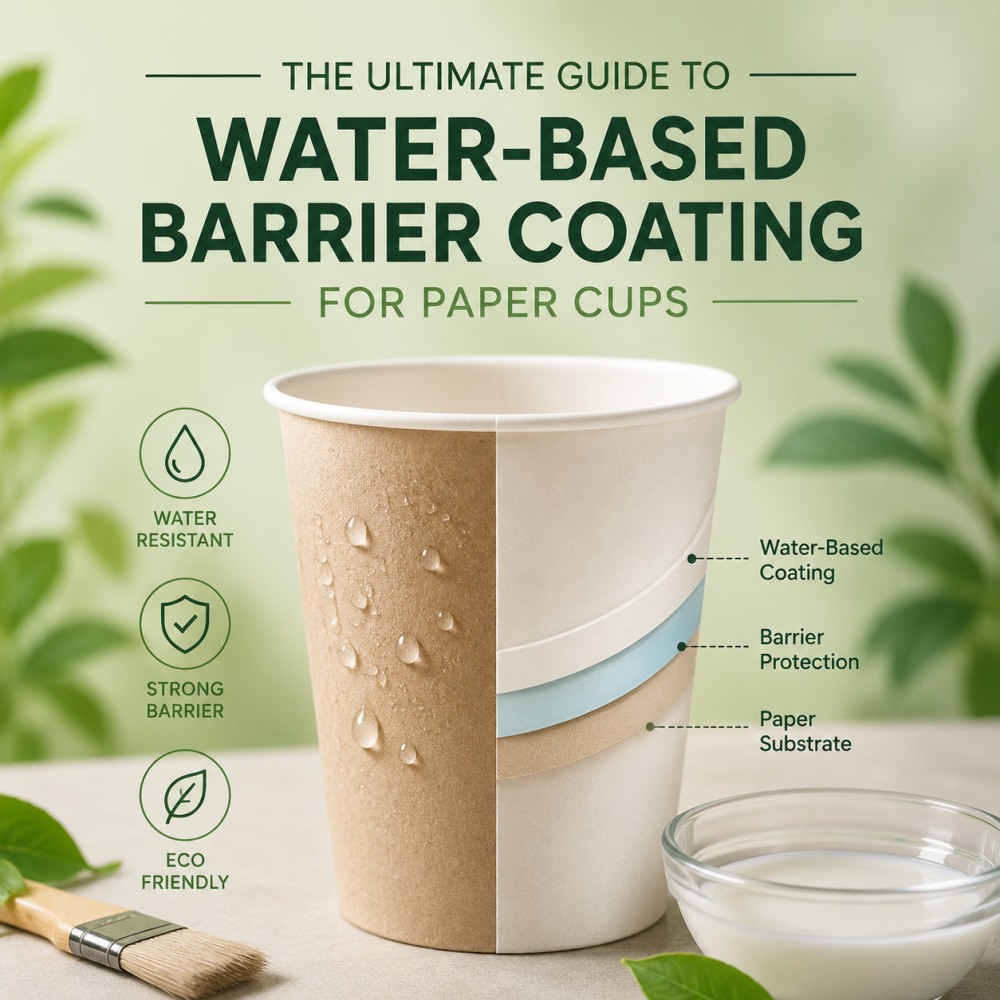
    You see water based coating paper cup solutions gaining attention because they use innovative, plastic-free technology. This approach supports the move from plastic to paper food packaging. Water-based coatings help you meet strict environmental standards. Recent regulations push for eco-friendly materials. Regulation Impact on Water-Based Coatings SUPD Promotes compliance with recycling standards, encouraging environmentally friendly materials. PPWR Drives the shift towards materials that align with circular economy principles, reducing compliance risks. You can choose options that comply with SUPD and PPWR, using bio-based materials for a sustainable future.     Key Takeaways Water-based coatings provide a plastic-free solution for paper cups, aligning with environmental regulations and reducing plastic waste. These coatings enhance recyclability, allowing cups to be processed with regular paper, which helps minimize landfill waste. Water-based coatings improve food safety by avoiding harmful chemicals and reducing the risk of microplastics in beverages. Choosing water-based coatings supports a positive brand image, appealing to consumers who prioritize eco-friendly products. Investing in water-based coating technology can lead your business towards sustainability while maintaining product performance.   What Is Water Based Coating Paper Cup? How Water-Based Barrier Coating Works You may wonder how a water based coating paper cup achieves its protective qualities without plastic. The answer lies in the dispersion technique. Manufacturers apply a liquid water-based dispersion directly onto the paperboard. This layer dries to form a thin, flexible barrier that keeps liquids from soaking through the cup. The process does not require a plastic film, which makes the cup easier to recycle. The chemical makeup of the dispersion is important. It contains emulsifiers and hydrophobic materials. These ingredients work together to block water, grease, and oil. You get a cup that holds both hot and cold drinks without leaking. The absence of a plastic film means you can recycle these cups in standard paper streams. This method supports the growing demand for water barrier coated cups and sustainable packaging. Tip: The dispersion technique not only improves recyclability but also helps you meet strict environmental standards. Key Benefits for Food Packaging Switching to a water based coating paper cup brings several advantages for food packaging. First, you avoid plastic entirely. The coating dissolves back into water during recycling, so it does not create microplastics. This feature allows you to recover up to 99% of the paper fibers, making the cup fully recyclable. You also meet the requirements of regulations like SUPD and PPWR, since the coating does not count as a plastic layer under EU rules. Here are some key benefits you gain when you choose a water based coating paper cup: Plastic-Free Solution: You eliminate the need for traditional plastic films, which helps your business align with new environmental laws. High Recyclability: The coating allows almost all paper fibers to be recovered, so you can recycle these cups with regular paper products. Improved Compostability: The coating breaks down more easily than plastic, which supports better waste management and composting. Enhanced Performance: The barrier resists water, grease, and oil, so your drinks and foods stay contained without leaks or soggy paper. You play a role in reducing plastic waste and supporting a circular economy when you use barrier coating for paper cups. This approach also helps you build a positive brand image. Customers notice when you choose eco-friendly options like paper cup coating. As more businesses and consumers look for sustainable choices, water based coating paper cup solutions stand out as a smart and responsible option.   Water-Based vs PE and PLA Coatings Composition and Application Differences You need to understand how the materials in paper cup coatings differ. Water-based coatings use a blend of water, natural materials like starch and cellulose, minerals, and some synthetic polymers. PE coatings rely on polyethylene, a type of plastic. PLA coatings come from renewable resources such as corn starch. Here is a table that shows the differences in composition and application: Coating Type Composition Details Environmental Impact Performance Characteristics Water-Based Blend of water, natural materials (starch, cellulose), minerals, synthetic polymers Biodegradable, eco-friendly Compostable, suitable for various applications PE Polyethylene Non-biodegradable, recycling challenges Excellent moisture and grease resistance PLA Derived from renewable resources (corn starch) Biodegradable under industrial composting Food grade, high strength, resistance to heat, water, and grease You see that water-based coatings offer a plastic-free solution. You can apply them directly to paperboard using a dispersion technique. PE and PLA coatings require extrusion or lamination, which adds complexity to manufacturing. Water-based coatings make recycling easier because they do not create microplastics. Another table highlights application differences: Coating Type Durability Environmental Impact Cost Compostability Ideal Use Case PE High Poor Low No Cost-driven mass production PLA Medium Good Medium Industrial composting Sustainable brands Water-Based Medium Excellent Medium-High Yes Eco-friendly packaging You can see that water-based coatings fit best for eco-friendly packaging and brands that value sustainability. PE coatings suit mass production where cost matters most. PLA coatings work for brands that want renewable materials but need industrial composting.     Efficiency and Performance You want your paper cup coating to perform well and stay cost-effective. PE coatings offer the lowest cost and excellent performance. PLA coatings cost more but provide good strength and resistance. Water-based coatings cost the most but match PE in performance. Here is a comparison table: Feature PE Coating PLA Coating Water-Based Coating Cost Lowest Medium Highest Performance Excellent Good Excellent You notice that water-based coatings deliver excellent performance. They resist water, grease, and oil, making them suitable for hot and cold drinks. PE coatings have high durability and moisture resistance. PLA coatings offer moderate durability and moisture resistance. Another table shows performance metrics: Coating Type Durability Moisture Resistance Environmental Impact PE High Excellent Moderate PLA Medium Moderate High Water-Based Medium Low Very High You see that water-based coatings excel in environmental impact. PE coatings last longer and resist moisture better, but they pose recycling challenges. PLA coatings perform well but need special composting facilities. Note: Water-based coatings help you meet strict environmental standards without sacrificing performance. You can use water barrier coated cups for a wide range of beverages and foods.   Environmental Impact You want to choose a coating that supports sustainability. Water-based coatings stand out because they work with modern recycling systems. You can recycle them with regular paper, which enhances their recyclability. PE coatings create recycling challenges, and PLA coatings need industrial composting. Water-based coatings can be repulped during recycling. You reduce waste and maintain cup strength. You find water-based coatings more compatible with recycling systems than PE and PLA coatings. Water-based coatings lower the environmental footprint. You enable better recycling and reduce energy use during production. PLA coatings require industrial composting. PE coatings are difficult to recycle and pose sustainability challenges. You play a key role in reducing waste when you choose barrier coating for paper cups. Water-based coatings support a circular economy and help your business meet environmental goals. Customers appreciate eco-friendly choices like water based coating paper cup solutions. You build trust and show responsibility by selecting sustainable packaging.   Food Safety and Microplastics Food Contact Safety Standards You want your water based coating paper cup to meet strict food safety standards. Manufacturers design these coatings to avoid harmful chemicals. You can see the main features in the table below: Feature Description Non-toxic Water-based coatings are free from harmful chemicals like PFAS, BPA, and VOCs. Biodegradable These coatings are eco-friendly and compostable, making them sustainable. Moisture and oil resistance They provide high resistance to moisture and oil, essential for food safety. You can trust water barrier coated cups to protect your drinks and foods. These coatings resist moisture and oil, so your food stays safe. You avoid exposure to toxic substances. You also support sustainability because the coatings break down naturally. Tip: Always check if your paper cup coating meets recognized food contact standards. This helps you ensure safety for your customers. Studies show that migration of chemicals depends on the type of food and the medium. You can see the findings in the table below: Study Findings Key Factors Influencing Migration Xu et al. (2010) Phthalate migration varied significantly, with higher rates in edible oils compared to mineral water. Lipophilic properties of food Baele et al. (2020) Higher migration levels in high-fat foods like chocolate and biscuits. Fat content of food Kubwabo et al. (2009) BPA migration rates differed between ethanol and water, indicating medium influence. Medium of contact (water vs. ethanol) You see that water-based coatings minimize migration risks, especially when compared to plastic linings.   Microplastics and Health Concerns You want to avoid microplastics in your barrier coating for paper cups. Water based coating paper cup solutions help you achieve this goal. Here are the main ways these coatings address microplastic concerns: The elimination of polyethylene (PE) plastic linings reduces the risk of microplastics being released into beverages. Water-based coatings use safe materials for food contact and do not leach harmful chemicals. These coatings are compostable and recyclable, contributing to sustainability and reducing plastic waste. Microplastics pose health risks. You should know the facts: Microplastics can release harmful chemicals like phthalates, PFAS, and BPA into food, which are known endocrine disruptors. These chemicals have been linked to various health issues, including cancer and reproductive problems. A 2023 study indicated that prenatal exposure to phthalates can lead to behavioral and learning disorders in children. Microplastics have been detected in various human body parts, raising concerns about their health impacts. You protect your customers when you choose water barrier coated cups. You reduce the risk of microplastics and harmful chemicals. You also support a healthier environment with sustainable paper cup coating options.   Recyclability and End-of-Life Recycling Water Based Coating Paper Cup You can recycle water based coating paper cup products easily. These cups fit into standard paper recycling streams. Facilities sort them alongside regular paper, and you do not need extra treatment. The recycling technology already exists, so you can repulp these cups without difficulty. Many recycling centers classify them under the PAP 22 code, which means you avoid complex separation steps. You help reduce landfill waste when you choose water barrier coated cups. Cup Type Recycling Capability Water-Based Coated Cups Can be recycled in standard paper streams PE-Coated Cups Cannot be recycled due to the plastic layer PLA-Coated Cups Faces recycling issues similar to PE   Compostability and Biodegradability You support composting and biodegradation when you select barrier coating for paper cups. Water-based coatings break down naturally. You can compost these cups at home or in industrial facilities. The coating dissolves in water and integrates with paper fibers, so it does not leave harmful residues. You improve waste management and help create nutrient-rich compost. PE-coated cups do not compost, and PLA-coated cups require special industrial composting. Tip: Always check local composting guidelines to ensure proper disposal of paper cup coating products.   End-of-Life Comparison You make a positive environmental impact when you choose water barrier coated cups. The end-of-life outcomes differ for each coating type. Water-based cups recycle or compost easily. PE-coated cups usually end up in landfills. PLA-coated cups need industrial composting and often face recycling challenges. Aspect Water-Based PE-Coated PLA-Coated Recyclability High in paper streams Low/specialized Limited Compostability Yes None Industrial only Common End Recycle/compost Landfill Landfill/compost Water-based barrier coated cups are fully water-soluble and integrate with fiber. You can dispose of them in standard mixed-paper or cardboard recycling bins. You help close the loop in packaging sustainability when you use water based coating paper cup solutions. You support recycling, composting, and a cleaner environment.   Real-World Performance Barrier Properties and Liquid Holdout You expect water barrier coated cups to keep drinks contained without leaks. Water-based barrier coatings form a strong layer on the paperboard. This layer prevents water from soaking through, even with hot or cold beverages. You can rely on these cups for coffee, tea, or juice. The coating maintains the cup’s shape and strength, so you avoid soggy paper and spills. Manufacturers design water based coating paper cup products to match the performance of traditional plastic linings. You get reliable liquid holdout and a sustainable solution. Tip: Water-based coatings help you serve drinks confidently, knowing the cup will not fail during use.   Grease and Oil Resistance You need barrier coating for paper cups that can handle greasy foods and oily drinks. Water-based barrier coatings create a plastic-free shield that resists grease, oil, and water. You find that these coatings perform as well as polyethylene, keeping liquids and oils inside the cup. The barrier composition gives substantial resistance to oil and grease, so you avoid leaks and stains. Description Type of Resistance The coating resists water, oil, and grease. Substantial resistance Water, oil, and grease cannot easily go through the barrier coating. Effective barrier The barrier composition gives resistance to oil, grease, and water. Effective barrier You can use water based coating paper cup solutions for beverages with fatty acids. The cups maintain their structure and prevent leaks, even with oily substances. Compared to polyethylene coatings, water-based options are easier to recycle and more eco-friendly.   User Experience You notice several benefits when you choose water barrier coated cups. The water-based dispersion coating protects paper from moisture and supports composting or recycling. You do not need to separate layers, which simplifies disposal. These cups meet strict safety standards and receive FDA approval for food contact. Businesses appreciate the appeal of compostable and recyclable materials. Innovations in renewable resources and water-based barrier systems enhance sustainability. Water-based coating is eco-conscious and protects paper from moisture. Cups can be composted or recycled without separating layers. Approved for food contact by the FDA. Higher production costs due to complex application. May not suit all products, such as carbonated beverages. You help your business stand out by using paper cup coating that supports environmental goals. Customers value the sustainable choice and enjoy a reliable, safe drinking experience.   Regulatory Compliance Global Regulations Overview You need to understand the global regulations that affect water based coating paper cup solutions. These rules help you ensure safety and sustainability for your products. Many countries set strict standards for food contact materials. You see agencies like the FDA in the United States and EFSA in Europe leading the way. Brazil uses ANVISA, while South America follows Mercosur guidelines. National regulations in Germany, Switzerland, and Canada also play a role. Regulation Description FDA United States Food and Drug Administration regulations for food safety. EFSA European Food Safety Authority regulations applicable in the EU. ANVISA Brazilian Health Regulatory Agency standards. Mercosur Regulations from the South American Common Market. National regulations Various national regulations from countries like Germany, Switzerland, and Canada. You must check these regulations before choosing a barrier coating for paper cups. Each region sets its own requirements for paper cup coating and water barrier coated cups. You protect your customers and your business by following these rules.   Certifications and Standards You want your water based coating paper cup to meet recognized certifications and standards. These certifications show that your products are safe for food contact and meet environmental goals. You should look for compliance with FDA 176.170 for direct food contact in North America. In Europe, Bfrxxxvi is the standard for direct food contact. Your cups must also show heat resistance up to 176°F. FDA 176.170 compliance for North America Bfrxxxvi compliance for Europe Heat resistance up to 176°F You can ask suppliers for certificates and test reports. These documents prove that your water barrier coated cups meet all safety and quality standards. You build trust with customers when you use certified barrier coating for paper cups. You also avoid legal risks and support sustainable packaging. Tip: Always verify certifications before sourcing paper cup coating solutions. This step helps you ensure compliance and quality.   Choosing the Right Solution Assessing Business Needs You need to evaluate your business requirements before selecting a water based coating paper cup solution. Start by considering key criteria that affect both performance and sustainability. The table below helps you compare important factors: Criteria Description Packaging approval requirements Focus on material composition and recyclability early in design. Recycling and fiber recovery focus Choose coatings that support fiber recovery and fit recycling systems. Water-based coating adoption Look for solutions that apply easily on existing production lines. Multifunctional coating solutions Seek coatings that protect against grease, moisture, and allow heat sealing in one layer. Sustainable foodservice packaging Select coatings that boost performance and support recycling goals. Low-coating-weight technologies Prefer coatings that deliver barriers with less material and lower drying needs. Lengthy approval process Ensure coatings perform well during production and storage to avoid delays. Food-contact compliance requirements Confirm coatings meet food safety and regulatory standards for your market. Production efficiency challenges Check for suitable drying capacity and stable conditions for water-based coatings. You should also weigh procurement considerations. Water-based coatings are eco-friendly and break down easily in nature, reducing waste. However, they often cost more than traditional PE coatings. Some coatings may not match PE in heat or grease resistance, which can limit use for certain foods or drinks. Availability may be limited, so sourcing can take extra time. Always consider regulatory readiness, product safety, heat performance, and how consumers view your packaging.   Sourcing and Supplier Tips When you source water barrier coated cups or barrier coating for paper cups, ask suppliers detailed questions to ensure you get the right product. Use the table below to guide your discussions: Supplier Claim Follow-Up Question “Hot cup grade” What beverage temperature, hold time, and cup format was this designed for? “Food grade” Which product, coating, use condition, and target market does the documentation cover? “Compostable” What certification or test evidence supports this, and does it apply to the full cup and coating? “Recyclable” In which market or collection system is this claim intended to apply? “Leakproof” What testing method or service condition supports the claim? “Suitable for coffee” Does that include milk-based, sweetened, or extended-hold beverages? “Eco” or “sustainable” Which specific attribute is being claimed, and what evidence supports that wording?   You should request certifications and test reports for any paper cup coating. Brands like elementscup provide documentation for food safety, compostability, and recyclability. This helps you verify claims and ensures your water based coating paper cup meets all standards. By asking the right questions, you can confidently choose water barrier coated cups that align with your business goals and sustainability values. You gain several advantages when you choose water based coating paper cup solutions: Water barrier coated cups offer a plastic-free, recyclable option that meets food safety standards. You help reduce landfill waste by allowing cups to be sorted with regular paper. Barrier coating for paper cups supports your brand’s environmental goals and aligns with consumer demand for eco-friendly products. Solenis and other providers offer paper cup coating technologies that match traditional performance while improving sustainability. You can invest in equipment, secure renewable materials, and educate customers to support your transition. By adopting these solutions, you lead your business toward a greener future.   FAQ What makes a water based coating paper cup different from a regular paper cup? You get a water based coating paper cup that uses a plastic-free barrier. This coating keeps liquids inside the cup. Regular paper cups often use plastic linings, which make recycling harder. Can you recycle water barrier coated cups with regular paper? Yes, you can recycle water barrier coated cups in standard paper streams. The coating dissolves during recycling, so you recover most of the paper fibers. Always check your local recycling guidelines. Are barrier coating for paper cups safe for hot drinks? You can safely use barrier coating for paper cups with hot beverages. These coatings resist heat and prevent leaks. Manufacturers design them to meet strict food safety standards. Do paper cup coating solutions contain harmful chemicals? No, paper cup coating solutions avoid harmful chemicals like PFAS and BPA. You get a safe product for food contact. Always ask your supplier for safety certifications. How do water based coating paper cups help the environment? You help the environment by choosing water based coating paper cups. These cups reduce plastic waste, support recycling, and break down more easily than plastic-lined cups. Customers notice your commitment to sustainability.
  • La transition vers une alimentation durable : pourquoi les emballages alimentaires modernes se tournent vers le papier La transition vers une alimentation durable : pourquoi les emballages alimentaires modernes se tournent vers le papier Jul 26, 2026
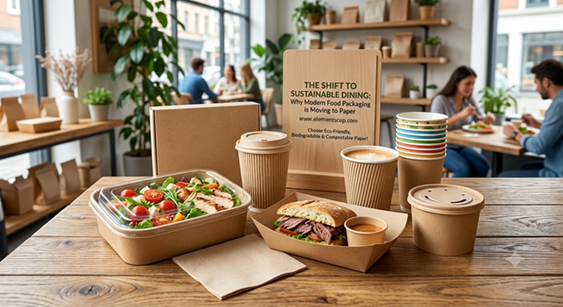
    Dans le secteur de la restauration, la livraison et la vente à emporter ne sont plus de simples options, mais des éléments essentiels à la réussite des entreprises. Cependant, l'augmentation du volume des commandes à emporter s'accompagne d'une prise de conscience accrue des consommateurs concernant les déchets d'emballage. Les emballages plastiques à usage unique et les contenants en polystyrène (Styrofoam) traditionnels sont progressivement abandonnés à l'échelle mondiale en raison des préoccupations environnementales et du renforcement des réglementations gouvernementales. Pour les restaurants, les cafés et les entreprises de traiteur, le passage aux emballages en papier durable n'est plus seulement une tendance, mais une stratégie commerciale essentielle. 1. L’impératif environnemental : au-delà des plastiques à usage unique Les contenants en plastique traditionnels peuvent mettre des siècles à se décomposer, se microfragmentant et se retrouvant dans les écosystèmes et les océans. À l'inverse, les emballages alimentaires en papier sont fabriqués à partir de ressources renouvelables, comme la pâte de bois issue de forêts certifiées FSC et les fibres de bambou à croissance rapide. Associés à des barrières modernes et écologiques, telles que les revêtements barrières aqueux (à base d'eau) ou les revêtements végétaux en PLA (acide polylactique), les contenants en papier offrent : Compostage industriel et domestique : Se décompose naturellement sans laisser de résidus toxiques. Empreinte carbone réduite : Réduction des émissions de gaz à effet de serre tout au long du cycle de vie de la fabrication par rapport aux plastiques dérivés du pétrole. Sécurité sans PFAS : Élimination des « polluants éternels » fluorés nocifs tout en conservant la résistance à l'huile et à l'eau. 2. La haute performance alliée à la praticité On pensait autrefois, à tort, que les contenants en papier ne résistaient pas aux liquides gras ou chauds. Les innovations industrielles actuelles ont complètement changé la donne. Gobelets étanches pour soupes et boissons : Les gobelets en papier à double paroi et à paroi ondulée offrent une isolation thermique supérieure pour les boissons chaudes sans nécessiter de manchons supplémentaires, tandis que les couvercles en papier technique assurent une fermeture hermétique et sans déversement. Résistance à la graisse et à l'eau : Les boîtes alimentaires en papier kraft naturel et les contenants bento à compartiments séparés sont recouverts d'une barrière aqueuse de qualité alimentaire, empêchant les sauces et les huiles de se ramollir. Sécurité du micro-ondes et du four : Contrairement aux contenants en plastique qui peuvent se déformer ou libérer des substances chimiques sous l'effet de la chaleur, les bols alimentaires en papier de haute qualité peuvent être réchauffés en toute sécurité. 3. Renforcer l'identité de marque par la personnalisation L'emballage est souvent le tout premier contact physique qu'un client a avec votre plat à emporter. Les contenants en plastique simples et sans marque donnent une impression de banalité ; les emballages en papier texturé naturel, imprimés sur mesure, communiquent une image plus soignée. qualité, soins et durabilité. La personnalisation des emballages papier permet aux marques de restauration de :   Mettre en valeur son engagement écologique : Mettez en évidence l'utilisation de matériaux biodégradables directement sur le contenant. Améliorer la présentation : Les boîtes à lunch à fenêtre transparente et les lignes épurées et modernes mettent en valeur les couleurs et la fraîcheur de vos plats. Développer la notoriété de la marque : Des logos personnalisés, dynamiques et conformes aux normes de sécurité alimentaire, ainsi que des schémas de couleurs personnalisés rendent vos plats mémorables et faciles à partager sur les réseaux sociaux. 4. Choisir le bon emballage papier pour votre menu Chaque plat nécessite des solutions d'emballage sur mesure pour préserver sa chaleur, sa texture et son attrait visuel : Catégorie alimentaire Solution papier recommandée Avantage clé Boissons chaudes et soupes Gobelets en papier à double paroi et récipients à soupe en papier Isolation thermique, étanchéité, sans PFAS Salades et kits repas frais Boîtes à lunch Kraft avec fenêtre et couvercles transparents en PET Attrait visuel élevé, fraîcheur préservée Burgers, frites et aliments frits Boîtes en carton kraft pliables / Boîtes en carton ventilées Protection à texture croustillante, doublure résistante aux graisses Cuisine asiatique et repas Bento Boîtes à bento en papier à compartiments multiples Empêche le mélange de saveurs Faites confiance à Elements Packaging pour votre démarche écoresponsable. À Emballage ElementsNous fabriquons une gamme complète de solutions d'emballage jetables écologiques, incluant des gobelets en papier certifiés FSC, des tasses à café à barrière aqueuse, des boîtes alimentaires en kraft, des bols à soupe en papier et des couverts compostables. Conçus pour durer et respectueux de l'environnement, nos emballages personnalisés OEM/ODM accompagnent les entreprises de restauration du monde entier dans leur transition vers une consommation durable. Prêt à moderniser vos emballages à emporter ? Contactez dès aujourd'hui notre équipe de conception pour demander des échantillons personnalisés et en savoir plus sur nos solutions de vente en gros.
  • Petits choix, grand impact : comment les emballages écologiques pour plats à emporter fidélisent les consommateurs Petits choix, grand impact : comment les emballages écologiques pour plats à emporter fidélisent les consommateurs Jul 18, 2026
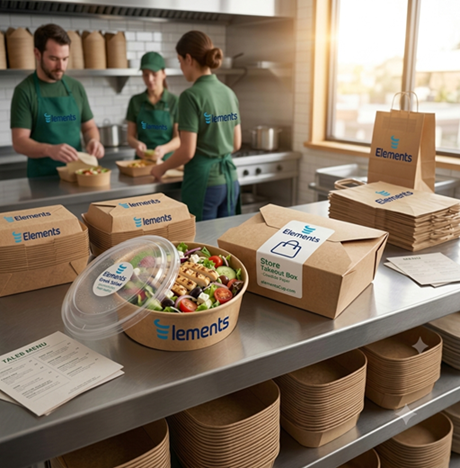
    Dans le contexte économique actuel, l'expérience culinaire ne s'arrête pas à l'emballage du repas pour la livraison. Les consommateurs modernes sont très soucieux de l'environnement. Lorsqu'une commande à emporter arrive emballée dans plusieurs couches de polystyrène non recyclable ou dans des plastiques lourds à usage unique, cela laisse un sentiment de culpabilité environnementale persistant.En tant que fabricant leader d'emballages alimentaires en papier, Elements Packaging a suivi de près cette évolution des comportements. Aujourd'hui, choisir un emballage durable n'est plus une simple formalité administrative.—C'est l'un des outils les plus efficaces pour fidéliser durablement la clientèle.La psychologie des emballages durablesLorsqu'un client découvre un repas présenté dans une jolie boîte à lunch en papier biodégradable ou dans un bol à nouilles en papier kraft naturel, son impression du restaurant s'en trouve instantanément améliorée. La texture organique et l'esthétique épurée des emballages alimentaires en papier de haute qualité véhiculent les valeurs de la marque : nous accordons une grande importance aux ingrédients que nous utilisons et à l'environnement que nous laissons derrière nous.De nombreux consommateurs recherchent activement des établissements qui partagent leurs convictions en matière d'écologie. En effet, proposer des boîtes et des sacs en papier compostables ou facilement recyclables confère aux entreprises un avantage concurrentiel qui fidélise la clientèle.Une fonctionnalité fluide au service de l'économie circulaireLes établissements de restauration rapide se demandent souvent si les alternatives écologiques peuvent résister aux exigences rigoureuses des livreurs et des applications de livraison. Nos gammes spécialisées de contenants en papier compatibles micro-ondes et de barquettes alimentaires en papier résistant à l'huile prouvent que le développement durable peut être extrêmement robuste. Elles sont spécialement conçues pour supporter des charges importantes, maintenir la température et éviter les fuites.En optant pour des pâtes à papier renouvelables qui se dégradent naturellement ou se recyclent facilement, votre entreprise agroalimentaire réduit activement ses émissions de gaz à effet de serre et détourne les déchets des décharges. Ensemble, repoussons les limites de l'industrie agroalimentaire vers un avenir plus vert et plus durable.
  • La nouvelle année continue de vous proposer des solutions d'emballage alimentaire en papier La nouvelle année continue de vous proposer des solutions d'emballage alimentaire en papier Jan 03, 2025
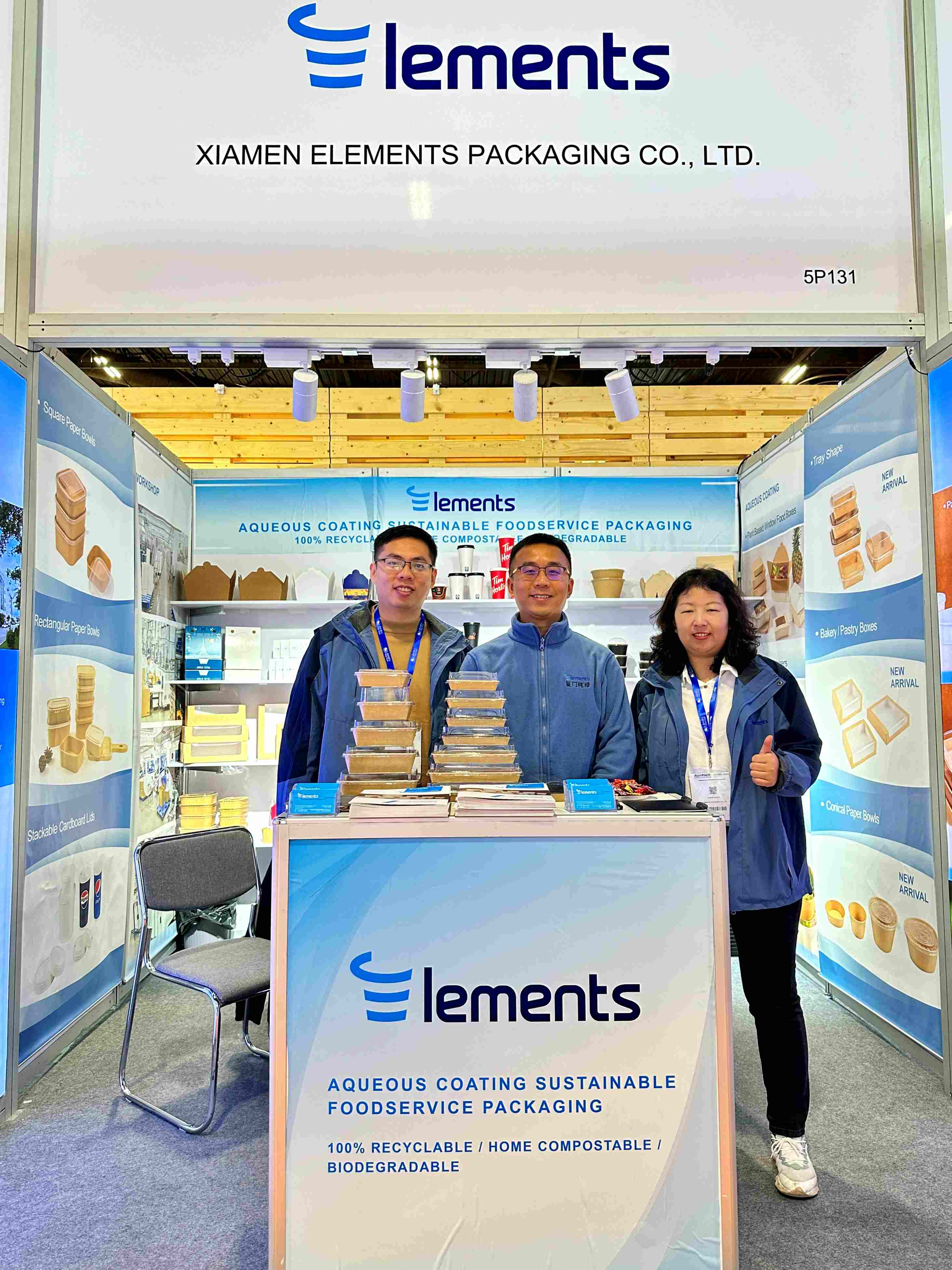
    La nouvelle année a commencé et nous revenons sur les trois expositions extraordinaires auxquelles nous avons assisté en octobre et novembre de l'année dernière et ce fut un voyage très fructueux. Nous avons participé à la prestigieuse Foire de Canton à Guangzhou, à la splendide exposition ALL4PACK à Paris et au captivant événement SAUDI HORECA dans la charmante Arabie Saoudite. Nous croyons fermement aux valeurs de durabilité et aux pratiques environnementales vertes, reconnaissant notre rôle essentiel dans la culture d’une coexistence harmonieuse avec notre planète. Notre engagement à créer une Terre plus belle grâce à des solutions d’emballage alimentaire respectueuses de l’environnement a été le moteur de notre succès. Ces prochaines expositions nous serviront de plate-forme pour dévoiler des solutions d'emballage alimentaire encore plus supérieures, spécialement conçues pour répondre à vos besoins. Dans un monde débordant de possibilités, nous nous efforçons d'être votre partenaire indéfectible dans le progrès, repoussant constamment les limites et évoluant pour dépasser vos attentes. Ensemble, embarquons-nous dans ce voyage fascinant vers un avenir où l'innovation et la durabilité règnent en maître, résumant l'essence de nos aspirations communes.  
  • A quoi peuvent servir les gobelets en papier ? A quoi peuvent servir les gobelets en papier ? Mar 06, 2024
    Gobelets en papier jetables en tant qu'objet essentiel dans notre vie, à quoi peut-il servir ?1. boissons : des gobelets en papier jetables sont généralement utilisés pour charger les boissons. Les deux peuvent être remplis de boissons chaudes, comme du café, du thé, du chocolat chaud, etc., peuvent également être remplis de boissons froides, comme du jus, des sodas, du café glacé, de la crème glacée, du thé glacé, etc.2. Aliments liquides : gobelets en papier jetables peut être utilisé pour charger du porridge, du yaourt, du milkshake, de la sauce, etc.3. Aliments solides : fruits, salades, biscuits, collationsEn tout, gobelets en papier sont très flexibles. Vous pouvez les utiliser pour contenir n'importe quelle boisson ou nourriture que vous aimez.
  • Donnez vie à un peu de fraîcheur avec des saladiers de différentes formes Donnez vie à un peu de fraîcheur avec des saladiers de différentes formes Mar 06, 2024
    Pour des raisons de praticité et de stabilité, bols en papier jetables sur le marché sont généralement conçus dans des formes rondes. Cependant, afin de répondre aux besoins de certaines occasions spécifiques, nous proposons également bols en papier carrés et bols en papier rectangulaires. Les consommateurs sont libres de choisir la forme des bols en papier qu'ils souhaitent utiliser en fonction de la situation réelle. Voici les avantages des bols carrés en papier :1. Pratique pour l'empilage et le stockage : les bols en papier carrés sont plus serrés et plus stables une fois empilés, occupant moins d'espace et plus pratiques pour le stockage et le transport.2. Grande capacité : la conception du bol carré peut lui permettre de contenir plus de nourriture et de mettre des aliments plus longs, tels que des saucisses, du poisson frit, etc.3. Polyvalent : en plus de servir des salades, des déjeuners, etc., il peut également être utilisé pour servir des gâteaux, des beignets, des biscuits et d'autres desserts de forme spéciale.Si vous souhaitez apporter un peu de fraîcheur à votre vie et avoir plus de choix pour conserver les aliments, n'hésitez pas à acheter nos bols en papier de différentes formes.
  • Les gobelets en papier jetables sont un élément indispensable des garde-manger et des salles de repos des entreprises. Les gobelets en papier jetables sont un élément indispensable des garde-manger et des salles de repos des entreprises. Mar 06, 2024
    Les employés doivent rester hydratés et mentalement alertes pendant les heures de bureau, c'est pourquoi des gobelets jetables sont souvent utilisés dans le garde-manger pour contenir les boissons. Les gobelets en papier jetables présentent les avantages suivants :1. Hygiène et sécurité. L'utilisation de gobelets jetables dans le garde-manger élimine le besoin de s'inquiéter de la contamination croisée ou de la croissance bactérienne, ce qui contribue à protéger la santé des employés et à prévenir la propagation des maladies.2. protection de l'environnement et économie d'énergie. Gobelets en papier jetables non seulement se dégrade facilement dans l’environnement naturel, mais peut également être recyclé après utilisation. Cela réduit efficacement la consommation de ressources naturelles.3. Léger et facile à transporter. Comparés aux gobelets en verre, les gobelets en papier sont légers et incassables, ce qui évite aux employés de se blesser en cas de chute accidentelle des gobelets. Dans le même temps, les gobelets en papier n'ont pas besoin d'être nettoyés, ce qui permet d'économiser considérablement du temps et des ressources humaines.4. Conception diversifiée. Les gobelets en papier jetables peuvent être imprimés avec les logos et les valeurs de l'entreprise, ce qui augmente la possibilité d'afficher l'image de marque et la culture d'entreprise.En résumé, l'utilisation de gobelets en papier jetables dans le garde-manger et le salon prend en compte l'hygiène, la protection de l'environnement, la commodité et la publicité, ce qui favorise la création d'un bon environnement de travail et l'amélioration du sentiment de bien-être des employés au travail.
  • Que sont les gobelets à café jetables en papier ? Que sont les gobelets à café jetables en papier ? Dec 11, 2023
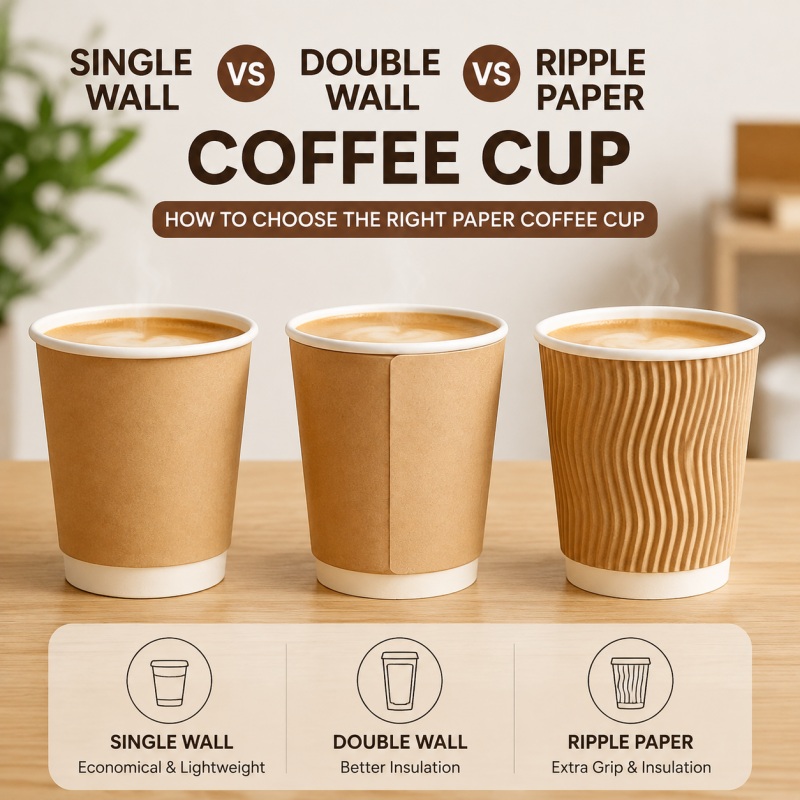
    Les gobelets à café jetables en papier sont des gobelets en papier utilisés pour servir des boissons chaudes ou froides et sont généralement utilisés dans les cafés, les débits de boissons, les traiteurs ou d'autres lieux de vente à emporter. Ils comportent généralement une ou plusieurs couches de papier, avec un revêtement à l'intérieur de la tasse qui augmente la résistance à la chaleur et à l'eau de la tasse.Les gobelets en papier à café jetables peuvent être classés en gobelets à paroi simple, tasses à double paroi, tasses murales ondulées et tasses murales en relief selon différentes conceptions. Parmi eux, des coupelles à double paroi et tasses murales ondulées avoir une meilleure isolation thermique et un meilleur effet de conservation de la chaleur.Parce que nos gobelets à café jetables en papier sont fabriqués à partir de pâte écologique et d'un revêtement écologique, ils peuvent être recyclés et dégradés après utilisation, réduisant ainsi considérablement l'impact sur l'environnement.
  • Les bols en papier sont-ils biodégradables ? Les bols en papier sont-ils biodégradables ? Dec 11, 2023
    Bols en papier sont généralement fabriqués à partir de pâte à papier ou de papier, ce qui les rend biodégradables. Le papier est fabriqué à partir de fibres naturelles (telles que la pâte de bois) qui se décomposent et se dégradent naturellement dans de bonnes conditions. Par conséquent, la plupart des bols en papier peuvent se biodégrader dans un environnement approprié.Cependant, pour bols en papier pour se dégrader efficacement, les conditions suivantes doivent être remplies :1. Environnement de traitement approprié : les bols en papier doivent généralement être traités dans des installations de compostage commerciales ou des systèmes de compostage industriels, ou dans un compostage domestique. Dans ces installations, des facteurs tels que l’humidité, la température et l’oxygène sont favorisés et contrôlés pour aider à décomposer et dégrader les bols en papier.2. Conditions et temps appropriés : Le taux de décomposition des bols en papier dépend de nombreux facteurs, notamment l'épaisseur du papier, le type de pâte et les conditions de traitement. En règle générale, les bols en papier peuvent mettre plusieurs mois à plusieurs années pour se dégrader complètement.Entre-temps, afin de garantir que bols en papier peuvent effectivement se dégrader et retourner à la nature, nous devons les recycler et les éliminer correctement sans les jeter.
  • Qu'est-ce qu'un gobelet en papier pour boisson froide ? Qu'est-ce qu'un gobelet en papier pour boisson froide ? Dec 04, 2023
    Les gobelets en papier pour boissons froides sont une sorte de gobelets en papier spécialement utilisés pour contenir des boissons froides ou glacées. Il est généralement fabriqué à partir d'un matériau en papier spécial, qui présente certaines performances d'étanchéité et de bonnes performances d'isolation contre le froid.Les gobelets en papier pour boissons froides sont généralement à double couche, avec un revêtement imperméable sur la couche interne et une couche protectrice sur la couche externe, ce qui peut isoler efficacement la température de la boisson froide et empêcher le gobelet en papier de se ramollir ou de fuir.Ils ont également souvent une grande capacité pour accueillir la plupart des boissons froides et glacées, et offrent un bec verseur pratique et un support inférieur stable.L'utilisation de gobelets en papier pour boissons froides permet de déguster des boissons froides plus facilement et plus hygiéniquement tout en réduisant l'impact sur l'environnement, car les gobelets peuvent être recyclés et récupérés.
  • Qu'est-ce qu'un gobelet en papier double paroi ? Qu'est-ce qu'un gobelet en papier double paroi ? Dec 04, 2023
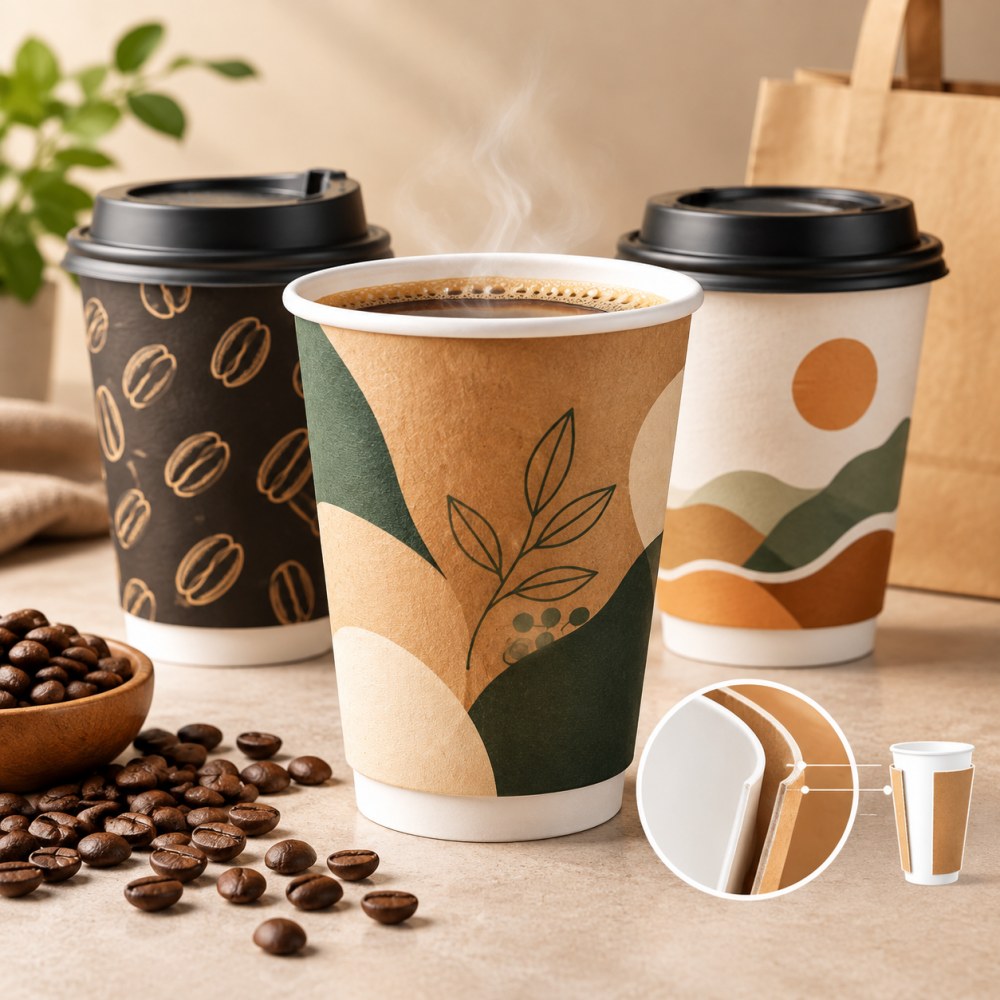
    Un gobelet en papier à double paroi est un gobelet en papier spécialement conçu qui se compose d'un gobelet en papier et d'un patch extérieur. Cette structure confère aux gobelets en papier double paroi de meilleures performances en termes de rétention de chaleur et d'isolation. Les gobelets en papier à double paroi sont généralement utilisés pour servir des boissons chaudes telles que le café, le thé, le chocolat chaud, etc. En raison de la formation d'une couche isolante entre la couche extérieure du gobelet en papier et la couche d'air, la température de l'extérieur est réduite. couche relativement basse et ne donne pas l'impression que la main est surchauffée, offrant une meilleure expérience de préhension et d'utilisation. La couche intérieure en carton est traitée avec un revêtement imperméable pour empêcher les boissons chaudes de pénétrer dans la couche extérieure du gobelet en papier. La conception du gobelet en papier à double paroi isole efficacement la chaleur, évite les brûlures et garde les boissons chaudes au chaud plus longtemps.
1 2 3 4

A total of4pages

laisser un message

laisser un message
Si vous êtes intéressé par nos produits et souhaitez en savoir plus, veuillez laisser un message ici, nous vous répondrons dès que possible.
nous faire parvenir

Domicile

Des produits

whatsApp

Contactez